Posted by:Dr. Hugo Isaak | Red Internacional de Ciudades Inteligentes (RICI)
Date:19/05/2026
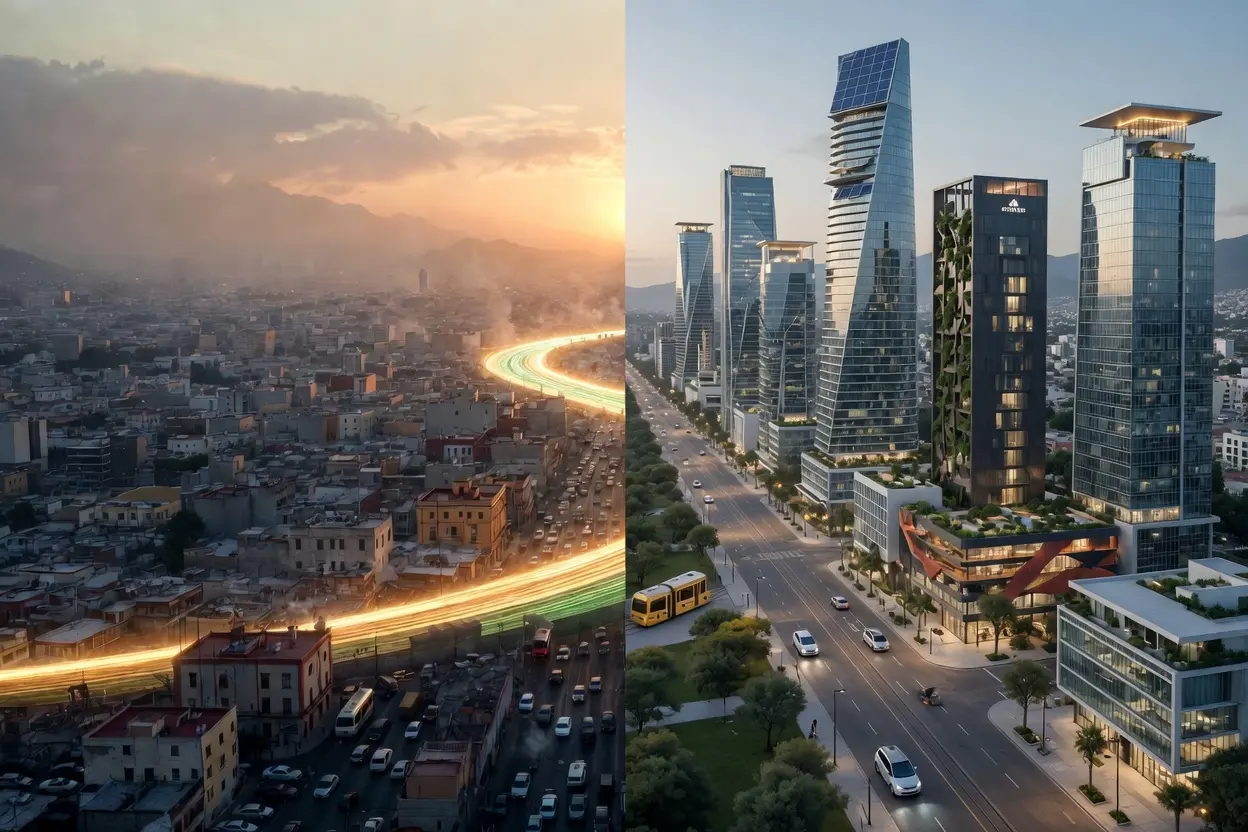
The Urban Intelligence Center (UIC) is conceived as the brain of modern cities, capable of integrating data and artificial intelligence to manage operations in real time and generate public value. International experiences demonstrate benefits in quality of life, resource savings, and efficiency, while the global market is projected to reach trillions of dollars by 2030. In Mexico, despite challenges in mobility and governance, regions such as Coahuila present opportunities to implement these models and strengthen competitiveness, investment, and citizen well-being.
The global discussion has moved beyond the technological stage. Today, the debate focuses on people—on how cities think, how they make decisions, and how they generate public value. Within this transition, one strategic element emerges with clarity: the Urban Intelligence Center (UIC).
From my perspective, an Urban Intelligence Center represents the natural evolution of public management in complex environments. It is an institutional and digital infrastructure that integrates data, artificial intelligence, and analytical capabilities to guide the city in real time, with precision and a forward-looking vision.
The UIC functions as the nervous system of the smart city. It does not merely observe; it interprets, anticipates, and guides public action. Its value lies in its ability to coordinate all city systems—mobility, security, healthcare, environment, and others—under a framework of integrated intelligence.
Global examples confirm this vision. In Singapore, the Smart Nation strategy has deployed more than 100,000 urban sensors, creating a real-time monitoring capability that directly impacts quality of life. In Barcelona, intelligent urban service management has generated savings exceeding €75 million annually, demonstrating that urban intelligence creates tangible value.
The evolution of cities is marked by a structural transition toward more sophisticated governance models. The IMD Smart City Index 2026 confirms a trend that I have observed firsthand in international forums: leading cities—such as Zurich, Oslo, and Geneva—have successfully aligned three critical dimensions: institutional trust, efficient infrastructure, and the strategic use of technology. This convergence redefines the contemporary concept of the smart city, where technology serves as a cross-cutting enabler of governance, aligning technical capabilities with decision-making processes focused on results and the well-being of residents.
Smart cities represent one of the most significant markets of the 21st century. The sector is expected to reach USD 1.3 trillion in 2026, with cumulative economic impacts potentially exceeding USD 20 trillion by 2030.
I have observed that cities adopting urban intelligence models achieve substantial benefits: operational cost reductions of up to 30% (Dubai case), efficiencies exceeding USD 100 million annually in urban services (New York case), and greater attraction of foreign investment through advanced digital ecosystems.
The Mexican case is particularly relevant. In the Smart City Index 2026, Mexico City ranks 123rd out of 148 cities evaluated. This result highlights structural challenges in mobility, security, and governance.
However, it also reveals a strategic opportunity. Mexico possesses talent, a privileged geopolitical location, and industrial capabilities that can be enhanced through the implementation of Urban Intelligence Centers.
Coahuila: A particularly relevant case within the national context, as it possesses structural conditions that favor the implementation of advanced urban intelligence models. Cities such as Saltillo and Torreón stand out for their strong industrial base, increasing integration into nearshoring dynamics, and the availability of highly specialized technical talent.
In this environment, the incorporation of an Urban Intelligence Center would make it possible to coordinate these capabilities through a framework of efficiency and data-driven decision-making, generating tangible short-term impacts. Among the most significant outcomes are reductions in travel times estimated between 10% and 20% through urban mobility optimization; improvements in public spending efficiency, with potential savings of up to 25% through digitalization and advanced analytics; and strengthened territorial competitiveness, reflected in a greater capacity to attract foreign direct investment.
This scenario positions Coahuila as a strategic laboratory for the implementation of urban intelligence in Mexico, with the potential to scale a replicable model to other regions of the country.
Through my experience as a member of the global expert group of UN-Habitat for the development of the International Guidelines on People-Centered Smart Cities, I have witnessed a structural shift in the way we understand, inhabit, and build our ecosystems—our cities.
Cities are no longer merely physical spaces; they have become complex systems that require intelligence to operate effectively. In my view, the true difference between a city that evolves and one that falls behind lies in its ability to integrate information, make timely decisions, and generate public value in a sustained manner.
Mexico has the opportunity to lead this transformation. The window of opportunity is open. The next step is to act with vision, precision, and determination.
Discounts of up to €8,000 for online master's programs with official certifications.
Study online master's degrees in BIM, 3D Visualization, and Architecture with official certifications.
Join to activate your special discount.

RICI Bot