Posted by:Francisco Flores | Red Internacional de Ciudades Inteligentes (RICI)
Date:11/6/2026
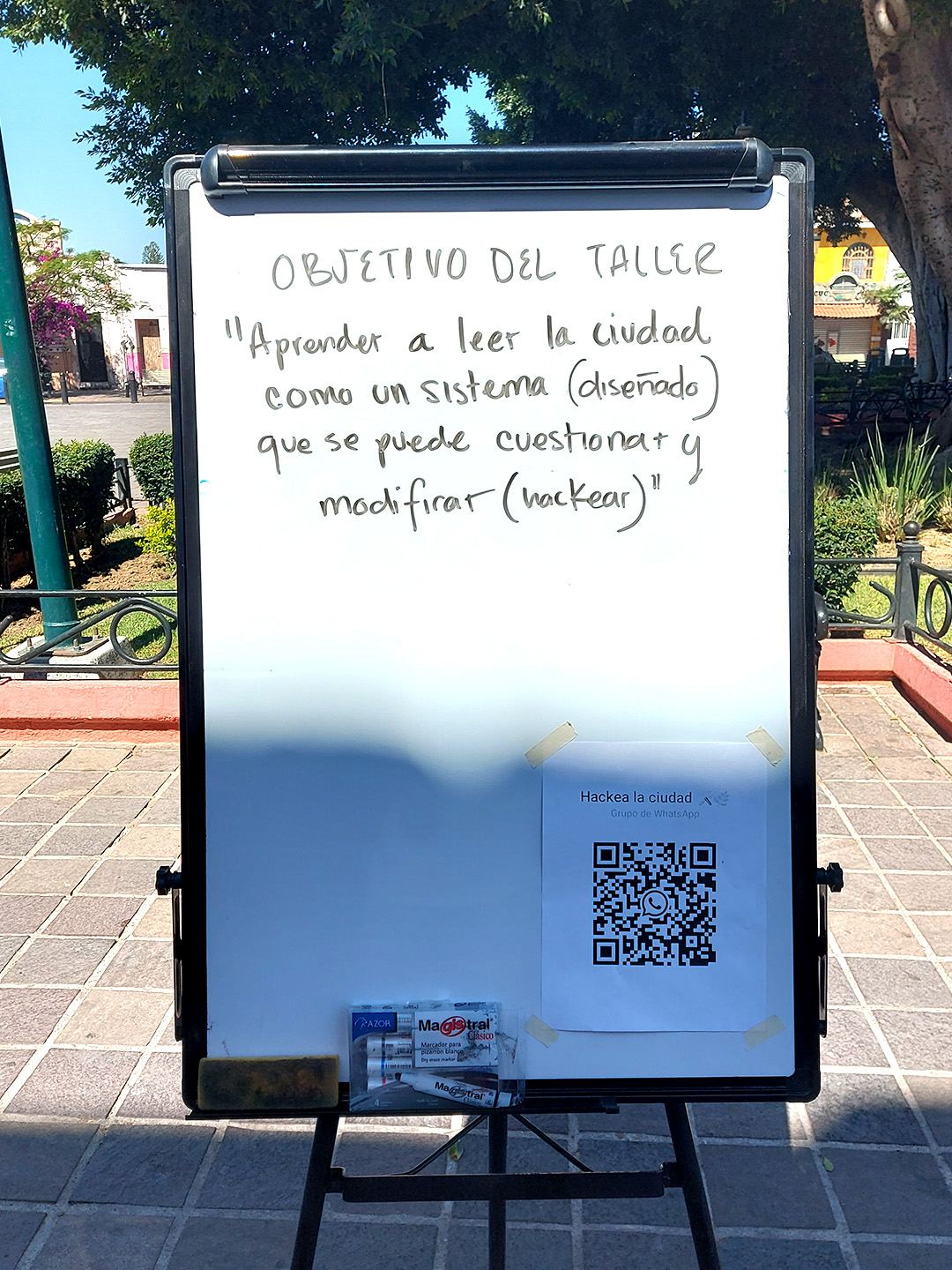
Smart cities are also built through everyday experiences. Urban design, citizen participation, and the ability to interpret the dynamics of public spaces are key elements in developing environments that are more livable, inclusive, and focused on people's well-being.
For decades, much of urban design has operated under a top-down logic: technical planning, spatial regulation, and rules aimed at control and organization.
However, everyday experience reveals a more complex reality.
Public spaces are living environments where design, use, appropriation, and exclusion are constantly in tension.
We understand this tension as a contested system: a condition in which different actors, needs, and ways of inhabiting the city continuously negotiate the meaning and function of space.
This dispute becomes visible through phenomena such as hostile architecture that restricts permanence, urban furniture that regulates behavior, spontaneous appropriations of space, and citizen interventions that redefine its uses.
Far from being anomalies, these phenomena reveal something fundamental: the city is constantly transforming.
One of the main lessons learned was the shift in the role of participants.
They moved from being users of space to becoming active observers capable of identifying concrete problems, questioning design decisions, and proposing improvements from an everyday perspective.
In addition, the group included people with diverse backgrounds and experiences, including citizens experiencing homelessness.
This enriched the reading of the environment and made it possible to incorporate perspectives that are not usually present in design processes.
In this context, the concept of place hacking offers a particularly valuable perspective.
More than a fixed methodology, it is a way of approaching a territory that encourages observation, the identification of frictions, and the imagination of micro-interventions capable of changing the urban experience.
Unlike large-scale urban transformations, place hacking operates from a tactical, everyday, and context-specific perspective.
Its strength lies in activating new questions: What behavior is this object encouraging? Who is included or excluded? What would happen if this design decision were different?
These questions open a dimension that is often underestimated in discussions about smart cities: the role of industrial design.
The workshop also highlighted the role of industrial design within the city.
Many of the problems identified do not require major investments or large-scale structural transformations.
In many cases, small decisions can generate significant changes: redesigning a piece of urban furniture, improving usability conditions, and facilitating permanence or social interaction.
This creates an important opportunity for governments, academia, and communities to work through accessible, replicable, and immediately impactful interventions.
Several lessons from this experience can be applied to other urban contexts.
Observation is a design tool. Before intervening, it is necessary to understand how a space is actually used.
Diversity improves diagnosis. Including different perspectives helps identify problems that may not be evident to everyone.
Small-scale actions also transform. Not all solutions require major projects; many begin at the everyday scale.
Public space is dynamic. Designing means accepting that uses change and that solutions must adapt accordingly.
The experience in León leaves a reflection that may resonate in many cities.
Perhaps true urban intelligence does not lie solely in advanced technological systems, but in the collective capacity to critically read a territory and transform it from the local level.
At a time when discourses on urban innovation are proliferating, it is worth remembering that no technology can replace situated observation, active participation, and context-sensitive design.
Ultimately, a truly smart city is not the one that controls its dynamics most effectively. It is the one that allows its inhabitants to understand them, question them, and participate in redesigning them.
In other words, if a city does not work for people, perhaps it does not simply need more technology. Perhaps it needs to learn how to hack itself.
In a context where cities seek to become smarter, more sustainable, and more inclusive, it is worth broadening the conversation:
Are we designing cities that truly respond to how people live and use public space?
Discounts of up to €8,000 for online master's programs with official certifications.
Study online master's degrees in BIM, 3D Visualization, and Architecture with official certifications.
Join to activate your special discount.

RICI Bot